


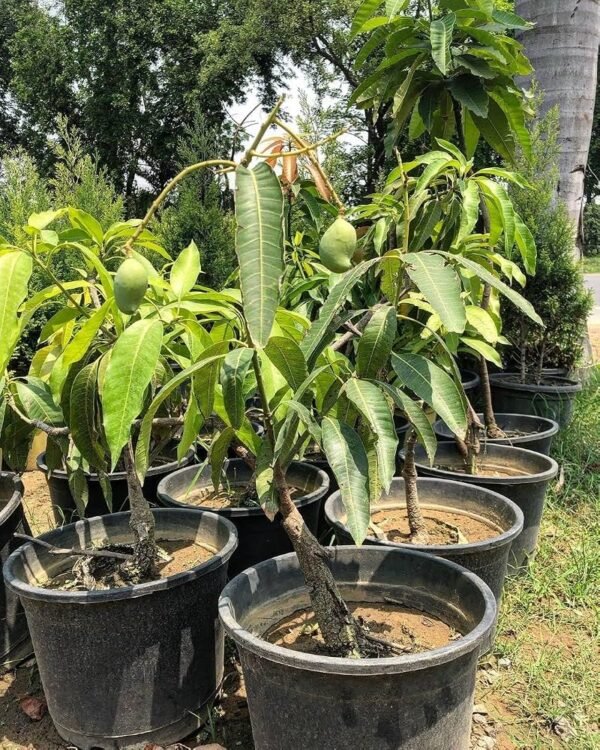


Mango Tree (Mangifera indica) – Tropical Fruit Tree
The Mango Tree (Mangifera indica), commonly known as Aam, is one of the most popular tropical fruit trees in India. Loved for its delicious, juicy fruits and attractive evergreen foliage, the Mango Tree is a wonderful addition to home gardens, orchards, farmhouses, and spacious outdoor landscapes.
Mango trees are valued not only for their fruit but also for their cultural and traditional significance. In Hindu traditions, mango leaves are considered auspicious and are commonly used in religious ceremonies, festive decorations, and traditional rituals. They are associated with several Hindu deities, including Lord Shiva, in various cultural traditions.
Key Features of the Mango Tree
- Botanical Name: Mangifera indica
- Common Name: Mango Tree, Aam Tree
- Plant Type: Evergreen Tropical Fruit Tree
- Sunlight: Full Direct Sunlight
- Watering: Moderate Watering
- Soil: Fertile, Well-Drained Soil
- Growth: Vigorous under Suitable Conditions
- Maintenance: Easy once established
- Ideal Location: Home Gardens, Orchards, and Outdoor Landscapes
Cultural and Religious Significance
The Mango Tree has a special place in Indian culture and traditions. Its leaves are traditionally used to decorate entrances, temples, and ceremonial spaces during festivals, weddings, and religious occasions.
Mango leaves are considered a symbol of prosperity, auspiciousness, and well-being. They are used in various Hindu rituals and are associated with different deities in regional traditions.
Growing a Mango Tree can bring a meaningful cultural connection and natural beauty to your garden.
Sunlight Requirements
The Mango Tree grows best in full sunlight. Adequate direct sunlight supports healthy foliage, flowering, and fruit development.
Choose an open outdoor location where the tree receives several hours of direct sunlight daily. Good light exposure is particularly important for mature trees intended for fruit production.
Watering Requirements
Mango trees need appropriate watering, especially during their early establishment period.
Water young plants regularly while allowing excess water to drain away. Once established, the tree can tolerate some dry conditions, although watering during prolonged dry spells can support healthy growth.
Avoid excessive watering and waterlogged soil, as these conditions can damage the roots. Adjust watering according to the weather, soil type, and age of the plant.
Soil Requirements
The Mango Tree prefers fertile, well-drained soil that supports healthy root development. It can grow in different soil types, provided drainage is adequate.
Before planting, prepare the soil with suitable organic matter if needed. Choose a location with enough space for the roots and mature canopy to develop.
Growth and Characteristics
The Mango Tree is an evergreen tropical tree known for its dense foliage, spreading branches, and seasonal fruit production.
Depending on the variety and growing conditions, mature trees can produce abundant mangoes with different shapes, sizes, colours, aromas, and flavours.
Mango trees can become large over time, so selecting an appropriate planting location is important for their long-term health.
Mango Tree Care Guide
Sunlight: Provide full direct sunlight for healthy growth and good fruit production.
Watering: Water young plants regularly. For established trees, adjust watering according to rainfall, soil moisture, and seasonal conditions.
Soil: Use fertile, well-drained soil.
Fertilizer: Apply a balanced fertilizer or suitable organic compost according to the tree’s age and growing conditions.
Pruning: Remove dead, damaged, or diseased branches when necessary. Prune carefully to maintain a healthy structure.
Spacing: Allow sufficient space for the tree’s mature height, spreading canopy, and root system.
Pest Monitoring: Inspect leaves, branches, and developing fruits periodically for signs of pests or disease.
Maintenance: Provide suitable growing conditions and monitor soil moisture, particularly during hot and dry weather.
Where Can You Grow a Mango Tree?
The Mango Tree is suitable for:
- Home gardens and backyards
- Fruit orchards and farms
- Farmhouses and large outdoor properties
- Tropical and subtropical landscapes
- Large outdoor spaces with adequate sunlight
Dwarf or compact mango varieties may be suitable for large containers, depending on the variety and growing conditions. Standard varieties generally perform best when planted in the ground with sufficient space.
Is the Mango Tree Easy to Maintain?
The Mango Tree is generally easy to maintain once established. It requires plenty of sunlight, suitable soil, appropriate watering, and occasional pruning.
Young trees need more attention during establishment. Fruit production depends on the variety, climate, plant maturity, pollination, and overall growing conditions.
Why Choose the Mango Tree?
The Mango Tree is an excellent choice for gardeners who appreciate homegrown fruits, attractive evergreen foliage, and traditional Indian plants. Its delicious seasonal harvest and cultural importance make it a valuable addition to suitable gardens and orchards.
Whether planted for its fruits, greenery, or traditional significance, the Mango Tree can remain a rewarding part of your outdoor landscape for many years.
Botanical Name: Mangifera indica
Common Name: Mango Tree, Aam Tree
Sunlight: Full Sun
Watering: Moderate Watering
Soil: Fertile, Well-Drained Soil
Growth: Vigorous under Suitable Conditions
Maintenance: Easy once established
Important Growing Tip: Mango trees can become large and require sufficient room for their mature canopy. Choose a sunny location with good drainage and select a variety suitable for your climate and available space.

Reviews
There are no reviews yet.